A workout plan is a specific sequence of exercises, training days, sets, reps and recovery, etc. Rather than doing random exercises, you have a plan that is organized around your goals, experience, schedule and equipment.
Knowing how to create your own fitness plan will help you train regularly, track your progress and won’t waste your time. If you want to lose weight, gain muscle, get stronger or stay active, your workout should be challenging enough to make a difference, but not too hard that you can’t do it for a long time.
Choosing exercises will not be sufficient if your aim is to rebuild muscle after a layoff, to perform an effective 30 minutes workout plan in spite of a hectic schedule, or to lose belly fat by the right training method. Better results also rely on knowing the best time to take protein, the difference between fiber vs protein, and practical science baked fitness tips. Women can begin with a suitable strength training for women program, while people with limited time may wonder: can just one gym session a week help you lose weight? When home exercises become too easy, knowing how to make body weight workouts harder can help you continue progressing.
Set a fitness goal.
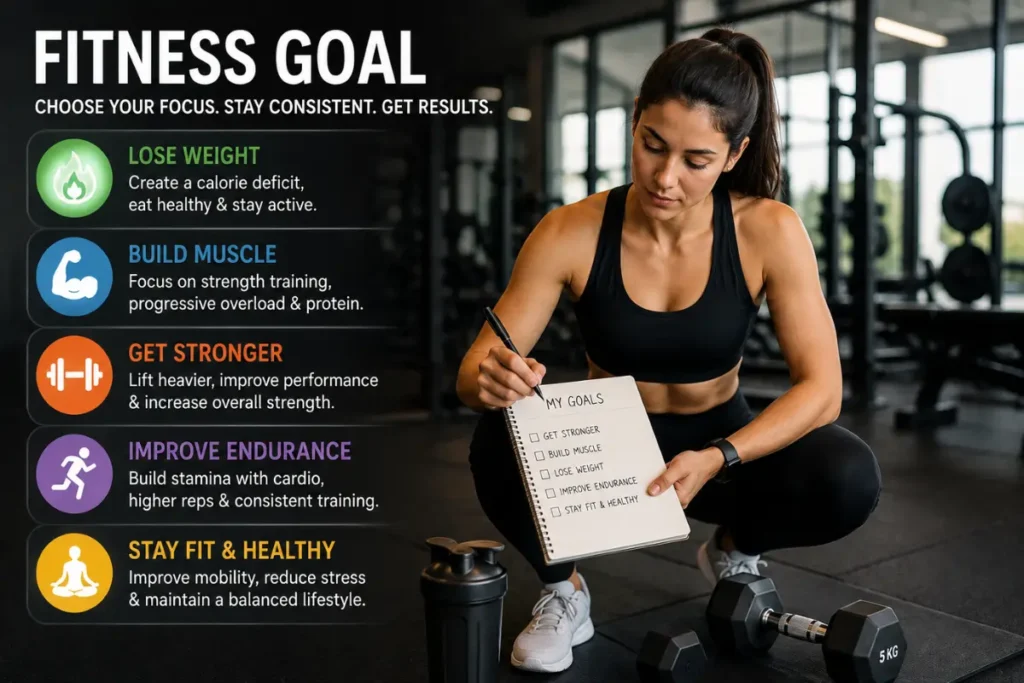
Before selecting exercises, decide what you want your routine to achieve. This is the most important step in understanding how to build your own workout routine, because different goals require different training methods.
Lose weight:
Combine strength training with cardio and a suitable calorie-controlled diet. Strength exercises help maintain muscle, while cardio increases your daily calorie expenditure. You cannot reduce fat from only one area, so focus on overall fat loss rather than endless abdominal exercises.
For muscle gain:
Prioritize resistance training, progressive overload, adequate protein, and recovery. Most exercises can be performed for 6–12 repetitions, using a weight that becomes challenging near the end of each set.
Strength:
Base your routine around compound exercises such as squats, deadlifts, bench presses, overhead presses, and rows. Strength training normally involves heavier resistance, lower repetitions, and longer rest periods.
General fitness:
Combine strength exercises, moderate cardio, mobility work, and core training. Two to four balanced workouts per week can improve health and everyday performance.
Endurance:
Use higher repetitions, shorter rest periods, circuit training, running, swimming, cycling, or another sustained cardiovascular activity.
Select a single objective. Other areas may still be worked on but if there is a priority, then it is easier to organise the routine.
Select How Many Days You Can Work Out:
You will want your workout frequency to be the same as your actual schedule. 3 days a week of training is more effective than doing 6 sessions and missing them often.
Two-day plan: Two rounds of full body exercise in a non-consecutive fashion.
Three day plan: Use three full-body sessions or an upper, lower, and full-body split.
Four day plan: Twice a week, an upper and lower split.
Five day plan: Divide your workouts across different muscle groups or movement patterns
Beginners usually make excellent progress with two or three weekly strength sessions. When deciding how to build your own workout routine, leave enough time between sessions for your muscles and joints to recover.
Select Home, Gym or No-Equipment Training
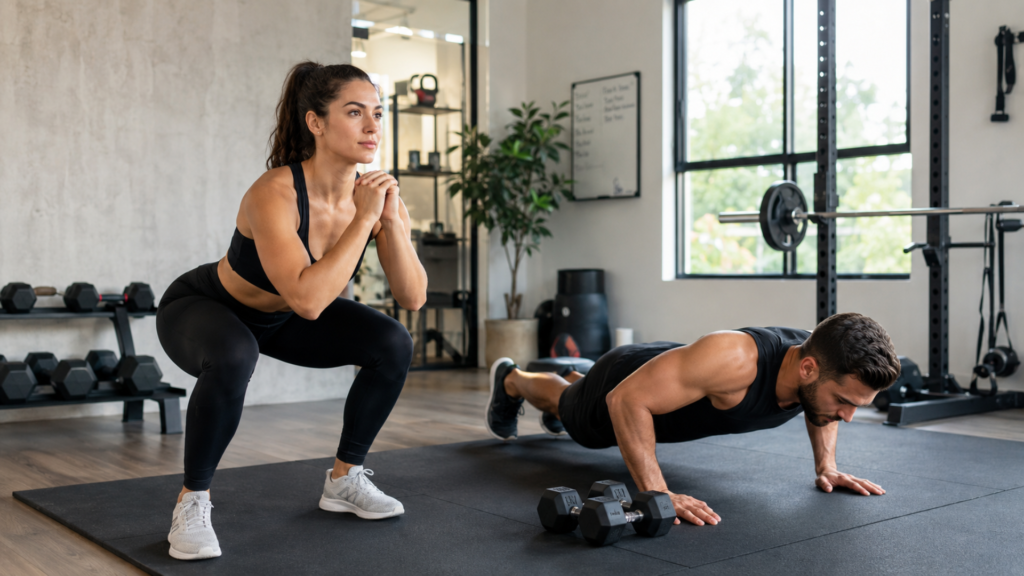
A gym offers barbells, dumbbells, cable stations, and machines, making it easier to increase resistance gradually. Working out at home can be convenient and can only involve dumbbells or resistance bands. No-equipment training involves exercises like push ups, squats, lunges, glute bridges and planks.
Select the training location that you feel you will be able to commit to most. Location is important, but so are consistency, effort, and progression in order to expand your options with equipment.
Select the appropriate exercises.
A good workout routine should include the essential areas of the body.
Lower body: Squats, lunges, dips, leg presses, step-ups, and leg lifts.
Lower body: Squats, lunges, deadlifts, step ups, hip thrusts and calf raises.
Core: Planks, dead bugs, bird dogs, knee raises and cable rotations.
Kettlebell swings, farmer’s carries, burpees, thrusters (full body).
Compound exercises work multiple muscles at the same time and isolation exercises work on a single muscle. Squats, presses and rows are compound exercises. Isolation exercises are those that involve just one muscle group, such as biceps curls, triceps extensions and leg curls.
As you begin to create your own workout, begin with compound exercises and finish with isolation exercises.

Organize Each Workout Appropriately
If there’s a clear structure, you’re employing your energy efficiently:
Warm up: 5-10 minutes to activate and get ready muscles to work out.
Main exercise: Do the most difficult compound exercise first.
Secondary exercises: Add 2-3 exercises to the main lift to support it.
Isolation exercise: if necessary, focus on individual muscles.
Core training: Do 1 or 2 controlled core exercises.
Cool down: Slow down your pacing and do some gentle mobility.
This easy order is a great place to start when trying to create your own workout without it becoming too complicated.
Select duration of sets, reps and rest periods.
The number of sets/reps should depend on your fitness objective.
| Goal | Sets | Repetitions | Rest |
| Beginner fitness | 2–3 | 8–12 | 60–90 seconds |
| Muscle building | 3–4 | 6–12 | 60–120 seconds |
| Strength | 3–5 | 3–6 | 2–4 minutes |
| Endurance | 2–4 | 12–20+ | 30–60 seconds |
Control and technique should be the primary focus for the beginning player. Choose a weight that is difficult to complete the set at the end of the set but still maintains good form.
Decide How Long to Work Out
Exercise doesn’t have to be hours long.
A short full body circuit can be incorporated into a 20 minute workout.
There are 4 or 5 exercises in a 30 minute workout.
With a 45-minute session, you will have enough time for strengthening exercises, accessories and core workouts.
For high volume muscle or strength sessions, 60 minutes is a good time.
Quality of work is more important than quantity of workouts! A short 30 minute session can be more effective than an untargeted 90 minute workout.
Make a weekly workout plan.
If you’re creating your own exercise regimen, be sure to schedule rest days. These give your muscles and joints time to heal before the next workout.
| Day | Activity |
| Monday | Full-body strength |
| Tuesday | Walking or mobility |
| Wednesday | Full-body strength |
| Thursday | Rest |
| Friday | Full-body strength |
| Saturday | Light cardio |
| Sunday | Rest |
Active recovery can include walking, mobility exercises, stretching or light cycling. It should help you to recuperate, not exacerbate fatigue.

Sample Workout Plans
Three-Day Full-Body Plan
Do this exercise on Mondays, Wednesdays and Fridays:
Squat: 3 sets of 8–10 reps
Push-up and/or bench press: 3 sets of 8–12 reps
Dumbbell row: 3 x 8-12 repetitions
Romanian deadlift: 3 sets x 8-10 reps
Squats: 2 sets of 10–12 reps
Plank: 3 x 30-45 seconds
Four-Day Upper/Lower Plan
Monday: Upper body
Tuesday: Lower body
Wednesday: Rest
Thursday: Upper body
Friday: Lower body
Weekend: Rest or active recovery
Five-Day Workout Split
Monday: Chest and triceps
Tuesday: Back and biceps
Wednesday: Legs
Thursday: Shoulders and core
Friday: Full body or weaker areas
Weekend: Recovery
Busy-Person Two-Day Plan
Practice two non consecutive days. Per session include 1 squat, hip hinge, push, pull and core workout.
Combine Cardio and Strength Training
To lose weight, do 2-4 strength sessions and 2-3 cardio sessions a week. If you’re looking for muscle mass, focus on resistance training and moderate cardio. Strength and cardio days should be alternated for general fitness.
If muscle or strength is your goal, strength training first followed by endurance training in the same session. If increasing endurance is the priority, do the cardio exercises first.
It is crucial to balance out both activities if you want to make your own workout program without affecting your strength recovery through cardio.
Apply Progressive Overload
Progressive overload involves progressively increasing your training. You can:
- Increase repetitions
- Add another set
- Increase the resistance
- Take a more challenging exercise modification
- Enhance range of motion
- Slow the repetition speed down on each repetition
- Improve your technique
Only change one or two variables at a time. Small steps are easier to monitor and are generally safer to make than big steps.
Select the Appropriate Weight
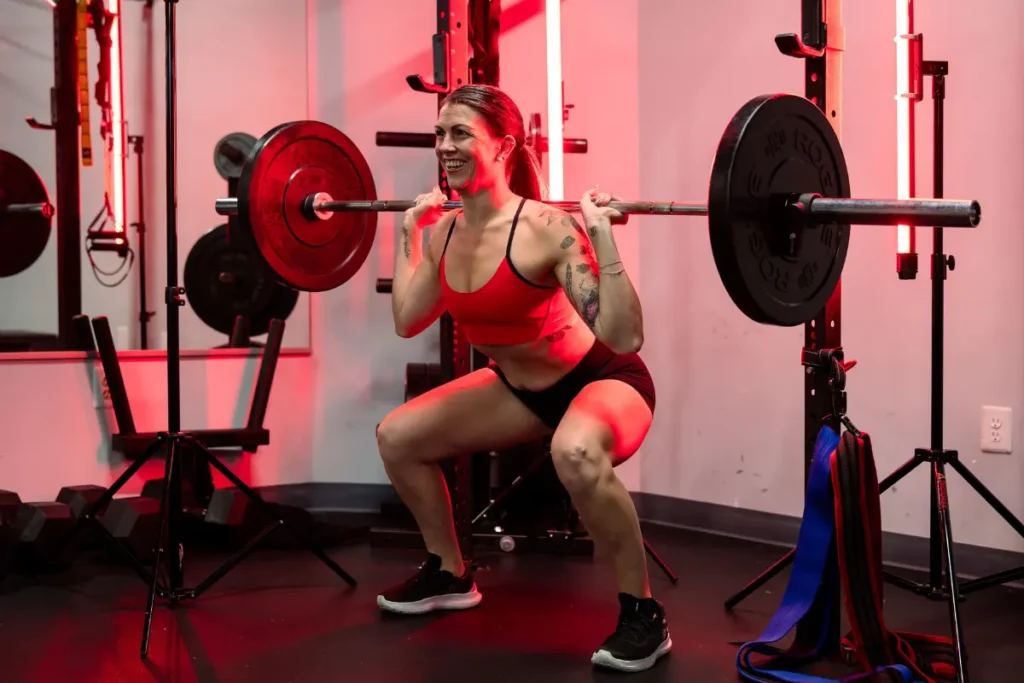
A good weight should feel challenging but allow you to do each rep with the correct form.
The weight may be too light if you could easily perform five additional repetitions. If you are unable to get in the range, use momentum or lose control, it may be too heavy.
Adjust the intensity of the exercise if you are able to do the most number of reps in each set with proper form.
Use Exercise Progressions and Regressions
Workouts should be modified based on your level of fitness.
| Exercise | Easier version | Standard version | Harder version |
| Push-up | Wall push-up | Floor push-up | Weighted push-up |
| Squat | Chair squat | Bodyweight squat | Goblet squat |
| Lunge | Supported split squat | Reverse lunge | Weighted lunge |
| Plank | Knee plank | Forearm plank | Weighted plank |
Choosing an easier version is not failure. It helps you develop the strength and control required for the standard movement.
Follow the Routine for 6-12 weeks.
Follow the same basic program for approximately 6–12 weeks. This will allow you to develop your skills and track your progress.
See if you can re-evaluate your plan if:
- Your goals have changed.
- The routine has become too much for you to maintain.
- There is a halt in progress for several weeks.
- You now have new equipment available.
- Exercise makes the pain last for longer.
Don’t change your exercises on a weekly basis. There are frequent changes, and it is hard to see improvement.
Overcome a Workout Plateau
But a plateau does not necessarily require a full change in your routine. Look at your sleep, eating form, recovery, effort and exercise form first.
One recovery week may require a small increase in resistance, adjustment of rep range, technique and/or volume changes. Have a training diary to keep track of what is no longer improving.
Avoid Common Planning Mistakes
Common mistakes include:
- Having too many exercises can be distracting and cause confusion.
- Running hard on an every-day basis
- Frequently changing routines
- Ignoring progressive overload
- Using poor technique
- Doing too much cardio whilst bulking up.
- Copying an advanced athlete’s routine
- Selecting exercises that are too difficult for you.
The number of exercises in a session ranges from four to seven and depends on the particular drill.
Prioritize Recovery and Nutrition
The training stimulus is provided by exercise and the recovery period will help the body adapt. Consume adequate amounts of protein from foods like eggs, fish, poultry, dairy products, beans and lentils. To have a balanced diet, include carbohydrates for energy, fibre for digestion, and healthy fats.
Drink plenty of water, get 7 to 9 hours of sleep and have one or two rest days per week. Everyone has different needs – you should always seek medical advice if you have a medical condition or special dietary needs.
Conclusion
Now that you know how to create your own exercise plan, you’ll know how to set a clear goal, plan for realistic workout days, find a balance of exercises, choose the right sets and reps, implement progressive overloading, and rest appropriately. Start with a general plan, keep track and ramp up the intensity over time. Consistency and good technique will produce better results than following an overly complicated routine.
Frequently Asked Questions
How to design your own exercise program?
Decide in what environment, how often, and what exercises you will do to accomplish your main goal. Plan a weekly workout program and get on it!
For the beginner, how many days a week is enough of exercise?
Two or three full body strength sessions are good enough for most beginners.
Will 30 minutes be enough?
Yes. Consistent workouts of just 30 minutes will enhance strength and fitness.
When is the best time to perform cardio before or after strength training?
If strength or muscle is a priority, then do strength first. If you have endurance as your primary objective, do your cardio first.
How often do I need to vary my workout?
Stick to a routine for six to 12 weeks before making any big changes, unless your goals, schedule or physical condition change.
How many sets per workout?
The typical number of exercises required is 4-7. Focus on quality compound movements and technique.