You eat clean, you train on and off, the scale reads “normal,” and your stomach’s still soft while your arms still look thin. Here’s why that happens and how skinny fat strength training can help you build a stronger, more defined body.
Weekly Training Plan:
Monday
Full Body A
Wednesday
Full Body B
Friday
Full Body A
A simple repeatable weekly training split three lifting days is enough for most beginners.
Not fat enough to feel motivated. Not fit enough to feel proud. Just soft, stuck and a little invisible in your own body. If that’s where you are, there’s a name for it skinny fat and the standard advice for fixing it is almost always wrong.
You’ve probably already tried the obvious fix: eat less, add more cardio, watch the number drop. And your body looked the same. Maybe softer. That’s not a discipline problem. It’s a strategy problem, and skinny fat strength training is the strategy that actually addresses it.
Why the Scale Can’t Tell You Anything Useful
Weight is just mass. It has no idea whether that mass is muscle or fat. Two people can both weigh 68 kg one carrying 55 kg of muscle and 13 kg of fat, the other carrying 45 kg of muscle and 23 kg of fat. Same scale number. Two completely different bodies.
“Skinny fat” is what happens when your muscle-to-fat ratio is off usually the result of years of light cardio and under-eating, with almost no signal ever sent to your body to build muscle. Cutting calories further doesn’t fix that ratio. It just shrinks both numbers at once, muscle included, leaving you a smaller version of the same soft shape.
The goal was never to weigh less. The goal is to change what that weight is made of.
The Real Goal: Body Recomposition
Body recomposition means building lean muscle and losing fat at roughly the same time, instead of chasing one number on a bathroom scale. It’s slower to see than a crash diet, and the scale might barely move for weeks but your waistband, your posture, and your reflection will tell a different story.
2x
The U.S. Department of Health & Human Services recommends that adults get muscle-strengthening activity at least 2 days a week, along with 150–300 minutes of moderate-intensity aerobic activity each week. Resistance training is an important part of a balanced fitness routine. See the full physical activity guidelines.
How to Structure Skinny Fat Strength Training
Forget random workouts pieced together from videos. What you need is a simple full-body split, trained 3–4 times a week, built around compound lifts movements that recruit multiple muscle groups and give you the most return for your time in the gym.
For a full breakdown of how to build and schedule a routine around your own week, this guide on building your own workout routine walks through it step by step. Here’s a realistic starting week:
Week Structure
Day 1 — Full Body A
| Squat or leg press | 3 × 8–10 |
| Flat bench press or push-ups | 3 × 8–10 |
| Seated row or lat pulldown | 3 × 10–12 |
| Overhead press | 2 × 10 |
| Plank | 3 × 30–40s |
Day 2 — rest or a light walk
Day 3 — Full Body B
| Deadlift (light, form-focused) or hip thrust | 3 × 8 |
| Incline dumbbell press | 3 × 10 |
| Pull-ups (assisted) or band pulldowns | 3 × 8–10 |
| Dumbbell shoulder press | 2 × 10–12 |
| Face pulls | 2 × 15 |
Day 4 — rest · Day 5 — repeat Full Body A, slightly heavier
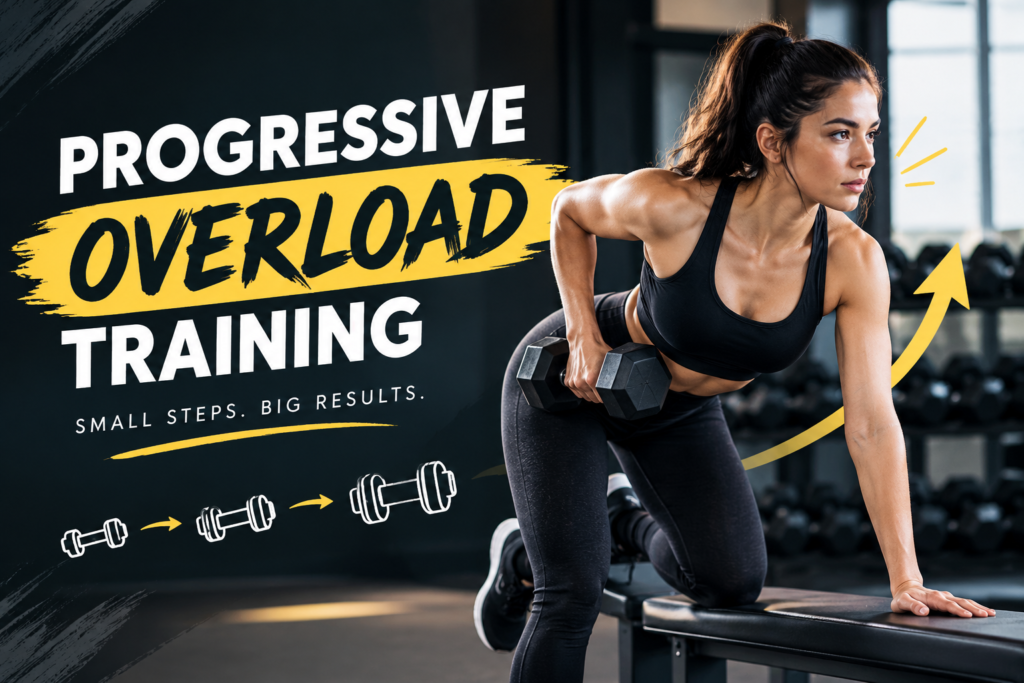
Progressive Overload: What “Getting Stronger” Actually Looks Like
This is the part most advice skips. If you squat 30 kg for 3 sets of 8 this week and finish every rep with 1–2 left in the tank, add 2.5 kg next week. If you can’t complete the reps cleanly, repeat the same weight until you can. Log the date, exercise, weight, and reps in your phone’s notes app. If that log trends upward over 8–12 weeks, the plan is working no matter what the scale says.
Nutrition: The Number That Actually Matters
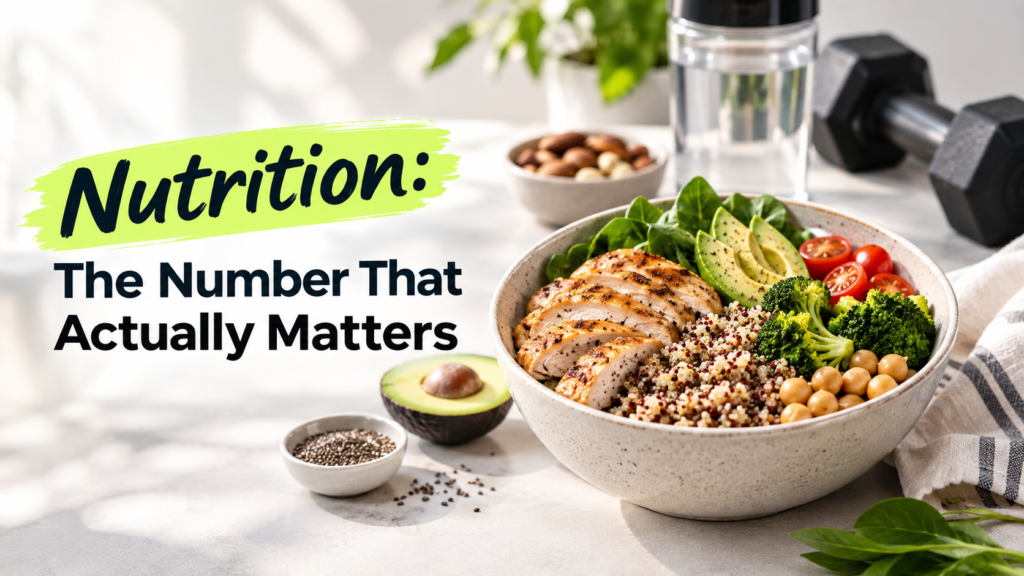
“Eat more protein” is useless without a target. For building muscle while staying lean, aim for roughly 1.6–2.2 grams of protein per kilogram of bodyweight per day. A 65 kg person lands somewhere between 105–145 grams daily. For the full breakdown by bodyweight and goal, see how much protein you should eat per day.
A simple 105–145g protein day looks like:
- 3 eggs + a glass of milk at breakfast (~24g)
- 150g chicken breast + lentils at lunch (~45g)
- Greek yogurt or a protein shake as a snack (~20g)
- 150g fish or paneer + beans at dinner (~35g)
Whether to eat at maintenance or a small deficit depends on your starting body fat but most skinny fat lifters do better spending 3–4 months at maintenance calories, focused purely on getting stronger, before ever cutting.
Recovery Is Not Optional. It’s Where the Muscle Is Actually Built
Training breaks the muscle down. Sleep and food build it back up, bigger. Aim for 7–8 hours a night. If you’re constantly exhausted, dropping from 5 training days to 3 will do more for your physique than a sixth day ever could.
And if you’ve fallen off training before — a busy month, an injury, plain burnout — don’t try to jump back in at your old intensity. This guide on rebuilding muscle after a gym break covers exactly how to return without setting yourself back further.

What Actually Tells You It’s Working
Put the scale away for eight weeks. Track these instead:
- The weight on your main lifts — it should be climbing
- Your waist measurement — stable or slowly shrinking
- A progress photo every two weeks, same light, same pose
- How your shirt fits across the shoulders and arms
If your lifts are going up and your waist isn’t growing, you’re recomposing building muscle and losing fat at the same time even if the number on the scale hasn’t moved once.
Ready to Follow a Real Plan Instead of Guessing?
Get structured workout routines, protein targets, and recovery guides built specifically for body recomposition all in one place at FittGears.
Conclusion
Skinny fat isn’t solved by eating less, it’s solved by lifting heavier things over time, eating enough protein to recover from that lifting, and giving the process three to six months before judging the results. Track your lifts, not your weight. That’s the entire strategy behind skinny fat strength training: no shortcuts, no gimmicks, just consistent, unglamorous work that actually compounds.