Everybody has almost at one point took a break in the gym. Regardless of whether you have ceased to train due to work, traveling, illness, injury, or even a lack of motivation, it is so tempting to resume your fitness pattern. You might find that your muscles are smaller, your strength is reduced, and exercises which used to be easy are now very difficult. The positive thing is that you have not lost all your progress permanently. With the natural muscular memory that your body has, it becomes significantly quicker to rebuild muscle after a gym break compared to the initial time you built it.
The common notion is that you need to go back to the beginning again as you miss a couple of weeks of training but that is not the case. The muscles that you have had significant adaptations in the earlier exercises and thus it is easy to regain lost power and size. Through regular training, good nutrition, good sleep and being patient you can easily rebuild muscle after a gym break and even stronger than before.
And in the event that you also want to enhance general fitness, with a regular 30-minute workout plan included in your weekly schedule, there is a chance that you will become more endurant, aid muscle recovery, and shed belly fat as you build back your fitness.

What Your Muscles Do on a Gym Break?
The muscles are deprived of the frequent stimulus they require to retain their size and strength when you cease strength training. Consequently, your body will eventually start a process called muscle atrophy whereby the muscle fibers will shrink. Nevertheless, this does not occur at once and muscle wasting is a gradual process.
Most of the individuals do not lose much of their muscle mass during the first two weeks of inactivity. You might feel weak since your body will be less efficient in doing exercises, but the mass of the muscles will be mostly the same. Strength and endurance will gradually decrease between two to four weeks. When the break lasts over a month, the muscles will get significantly smaller, and it will be harder to cope with heavy weights.
The amazing thing is that your body can still build muscle even when you are not in the gym due to muscle memory, several months after you are out of the gym. This is the reason why most of the lifters who are already experienced heal faster than amateurs.
Understanding Muscle Memory
Muscle memory is one of the largest reasons why individuals are able to rebuild muscle after a gym break with ease. As opposed to common belief, muscle memory does not just involve remembering the movements of exercises. It is a biological process that assists your muscles to gain their former size and strength in a more efficient way.
As you put on muscle mass by way of resistance training, your muscle fibers acquire more nuclei that help in muscle growth. Studies have revealed that most of these nuclei persist even when your muscles contract following a lengthy rest. These retained nuclei enable your muscles to grow much more rapidly when you resume training than when you began to exercise.
This is the reason why after a few months of absence in the gym, a person would be able to regain the lost muscles in a few weeks rather than take months to gain the same weight back through starting all over.
How Long Does It Take to Rebuild Muscle After a Gym Break?
The time taken to recover is determined by the duration of time that you have been inactive, your past training experience, age and lifestyle habits. Not all individuals heal in the same time frame, although there are certain expectations.
In case you had about two weeks of a break, then chances are that you will be performing better again in a week or two of regular practice. It can take two or four weeks before your strength comes back to normal after a one-month break. Most individuals are able to rebuild muscle after a gym break in six to eight weeks with proper workout and consuming sufficient protein during two to three months of break.
When you have not exercised in six months or more, it is natural that it will take longer to recover. Nonetheless, with muscle memory, muscle building is much quicker now as compared to the first time you embarked on strength training.
The key to recovery can be achieved with a balanced 30 minutes workout plan, which incorporates both resistance exercises and light cardio to enhance overall fitness. This method also helps individuals who desire to lose belly fat without compromising on muscle development.

Factors That Affect Muscle Recovery
The speed at which you can recover muscle after gym break is dependent on several factors.
One of the most crucial is previous training experience. Those who had been training regularly over the years and then took a break tend to get back on their feet quicker than the novices.
Another significant role is played by nutrition. Your muscles require the required amount of protein, carbohydrates, healthy fats, vitamins, and minerals to re-grow damaged tissue and new muscle fibers. Recovery becomes a lot slower without proper nutrition.
Sleep is a vital aspect as well since majority of the muscle repair occurs as long as your body is resting. Adults ought to strive to get seven to nine hours of quality sleep per night.
Lastly, consistency makes the key to effective recovery. Three or four workouts each week, which last 30 minutes, are much more effective than intense exercise a few days and then not exercising the rest of the week. This routine can also be helpful in losing belly fat and enhancing overall strength and endurance, when combined with healthy eating habits.
Best Exercises to Rebuild Muscle After a Gym Break
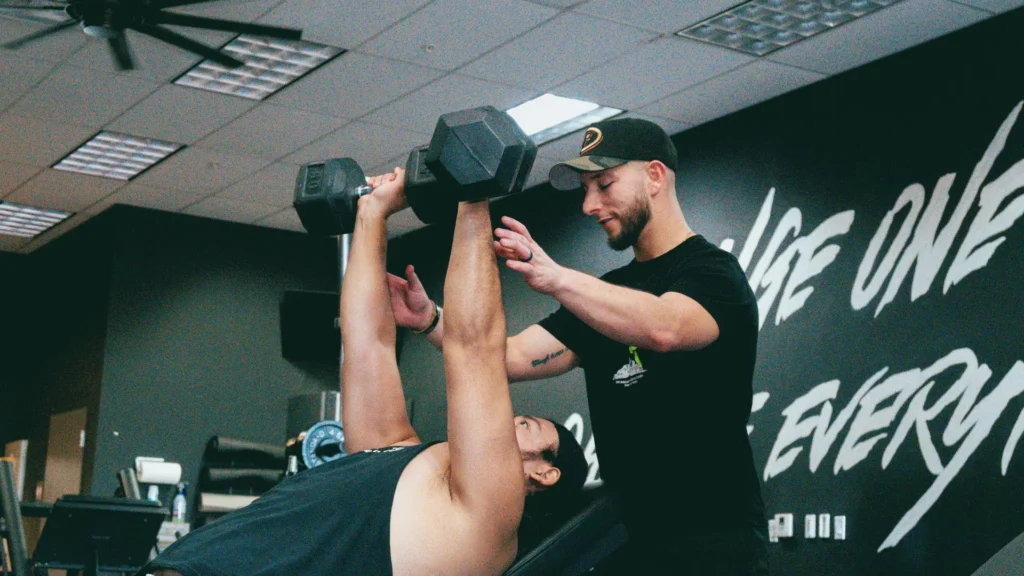
One of the quickest methods to regain muscle after gym break is to choose the appropriate exercises. Rather than attempting to do all the exercises that you were previously doing, work on compound movements, which involve training of several muscle groups simultaneously. These are more effective than isolation exercises as they assist in developing strength, coordination and muscle development.
The most excellent body exercises are:
- Squats
- Deadlifts
- Bench Press
- Lat Pulldowns or Pull-Ups.
- Overhead Press
- Barbell or Dumbbell Rows.
These exercises engage multiple muscles at the same time so that your body can regain strength much quicker. In case you are coming back after a long break then begin with light weights and master your form and then add weight.
A 30 minute workout with balanced exercises of compound and short rest intervals can enhance muscle recovery and burn more calories. In case you also want to lose belly fat, you can also include 10-15 minutes of walking or cycling briskly after you have done some strength training to further aid fat loss.
Warm-Up gradually and then work harder.
Among the greatest errors individuals commit after going back to the gym is using the same weights they were using prior to taking a break. Your muscles, joints and tendons require time to adjust once more.
Your first week should be done with an approximate of 60-70% of your former working weight. This will enable your body to safely recover muscle between gym sessions without posing a greater risk of getting injured. By increasing your strength, you can slowly add more and more weight every week using the concept of progressive overload. Minor, regular advances are much better than attempting to advance at too much speed.
Three-four days of training per week will allow your muscles time to rest, yet keep a consistent training pace. The days of recovery are also equally important as the workout days since this is the period when your muscles are recovering and developing.

Nutrition is a Big part of Muscle Recovery.
It requires exercise to recover muscle following gym break. It takes high-quality nutrition to help your body to repair the muscle fibers and make them strong again.
The most crucial nutrient in muscle growth is protein. The amount of protein that most active adults are supposed to take in daily is between 1.6 to 2.2 grams per kilo of body weight. The best sources of proteins are chicken breast, fish, eggs, Greek yogurt, lean beef, tofu, beans, lentils and protein shakes.
One should not give up carbohydrates as they restore the glycogen storage and give energy to exercises. Whole- grain bread, potatoes, sweet potatoes, fruits, oats, and brown rice are healthy carbohydrates.
Healthy fats also aid in the production of hormones and general healing. Avocados, nuts and seeds, olive oil, and salmon are examples of foods that contain critical fats that are helpful in muscle development.
It is equally important to be hydrated. Adequate intake of water during the day will enhance your performance in the workout, aid in recovery, and also make your body run effectively in the process to restore muscle post the gym break.
Common Mistakes to Avoid
A lot of individuals slacken their improvement after they resume training due to preventable errors.
Attempts to exercise heavy weights in the short run normally result in undue soreness or injuries. The other mistake that people make is the absence of warm-ups as cold muscles have higher chances of getting strained during the exercise.
Inadequate nutrition is also a significant barrier. Your muscles will not be able to recover effectively without sufficient protein and calories. Other individuals also compare themselves to their former fitness level and get discouraged when they feel progress is slow. Rather, aim at a slow but steady progress and make weekly small successes.
Having a regular 30-minute exercise program, balanced meals, and sufficient rest will assist you in shedding belly fat and gradually gaining strength.
Symptoms that Your Muscles are Healing.
With your body starting to rebuild muscle after a gym break, there are a number of positive changes that you will notice. Your exercises will begin to become less challenging, your body will become stronger, and the muscle pain will reduce over time. Your muscles might look more plump and you will be able to endure longer in the process of strength training as well as your cardio.
You can also find that your performance is getting better and your confidence and motivation are also getting better. These all are good indications that your training plan is working and your body is adapting well.
Final Thoughts
It may seem hard to go back to the gym after a break, however, this does not imply that you will have lost all your gains. With muscle memory, your body is created to repair muscle after gym break much quicker than it initially constructed muscle. Regardless of the length of your break, a few weeks or several months, being consistent, patient and smart in training will bring you to your strength safely.
Adhere to a workout program, consume adequate protein, be hydrated, and get sleep at night. The benefits of combining strength training with a 30 minutes workout plan are that it will enhance your overall fitness as well as assist in lose belly fat in a natural manner. Always keep in mind that only consistency will lead to permanent outcomes, not perfection. Be persistent in your training, have faith in the process and you will be back on the fitness level you were before and even better.
Frequently Asked Questions
- Which is the time of muscle recovery during gym break?
Within 2 to 8 weeks most individuals are able to regain muscle following a gym break, based on the time they stopped training and the consistency with which they resume training.
- Two weeks without training: Will I lose muscle?
Not much. During the initial two weeks, most individuals do not lose much muscle, but the strength and endurance can decline temporarily.
- Is there such a thing as muscle memory?
Yes. Muscle memory assists individuals who have been trained before to acquire muscle and strength much quicker than a beginner.
- On my first day back should I lift heavy weights?
No. Begins with lighter weights and progressively advances in intensity in the next few weeks.
- Does a 30 minute exercise aid in muscle rebuilding?
Yes. An effective muscle recovery and strength-building routine is a 30-minute resistance training exercise that can be well designed.
- Can I lose belly fat and build muscle?
Yes. With a healthy diet, strength training and frequent cardio you will lose belly fat as well as build muscle.
- What is the amount of protein that I should consume daily?
Target 1.6-2.2 grams of protein per kilogram of body weight to aid in muscle recovery and growth.
- What is the greatest error upon rejoining the gym?
The most common mistake is to attempt to do your old weights at once rather than progressively increase intensity.