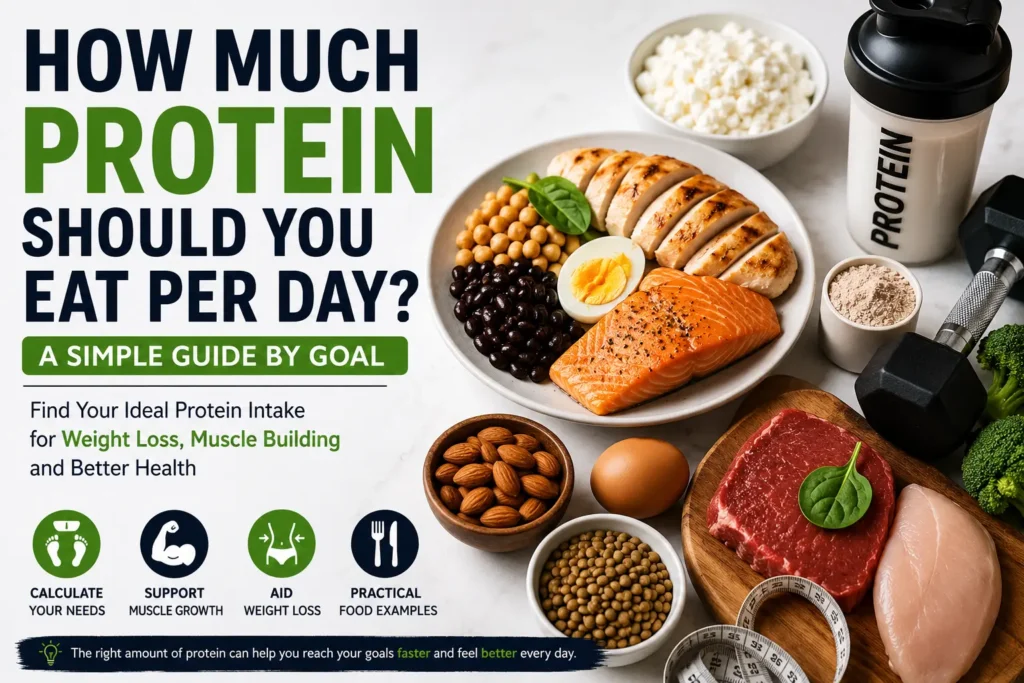
Introduction:
If comparing Fiber vs Protein, it would definitely be a safe bet to say that you need both. Fiber aids digestion, blood-sugar regulation, cholesterol management and gut health. Protein provides the amino acids that are needed to repair and reconstruct tissue and form necessary compounds. Don’t select a winner; take multiple of each item.
Both are not always the most important. Protein helps repair tissues and maintain muscles, fiber is helpful for digestive and metabolic functions. It may be especially satisfying to pair them up. Your preferred balance will vary based on your age, activity level, health and objectives.
Continue Your Health and Fitness Journey
Nutrition works best when it is supported by a consistent exercise routine and a well-planned recovery strategy. If you have limited time, follow this practical 30-minute workout plan to stay active without spending hours in the gym. Readers returning to exercise after a break can also learn how to rebuild muscle safely and effectively.
If improving body composition is your goal, explore proven ways to lose belly fat and learn the best time to take protein for better workout recovery and muscle support. You can also strengthen your overall fitness routine with these science-backed fitness tips.
Women who want to become stronger and more confident can read this complete guide to strength training for women. If a busy schedule prevents you from exercising regularly, discover whether just one gym session a week can help you lose weight.
Together with this guide to balancing fiber and protein, these resources can help you create a sustainable approach to nutrition, exercise, weight management, and long-term health.
What Is Fiber?
Fiber is a component of plant food that can’t be completely broken down by the body. Soluble fiber swells and turn into a gel in the water, it may help slow digestion and maintain healthy cholesterol and glucose levels. Fiber that is not digested or absorbed provides bulk and moves food through the digestive system.
Some fibers are fermentable that provide food for good bacteria in the digestive system. Sources include beans, lentils, vegetables, fruits, whole grain, nuts and seeds.
What Is Protein?
Amino acids are a macronutrient known as protein. Its uses in the body include in the repair of tissues and in the production of antibodies, enzymes and hormones. Nine amino acids are essential for the production of the food.
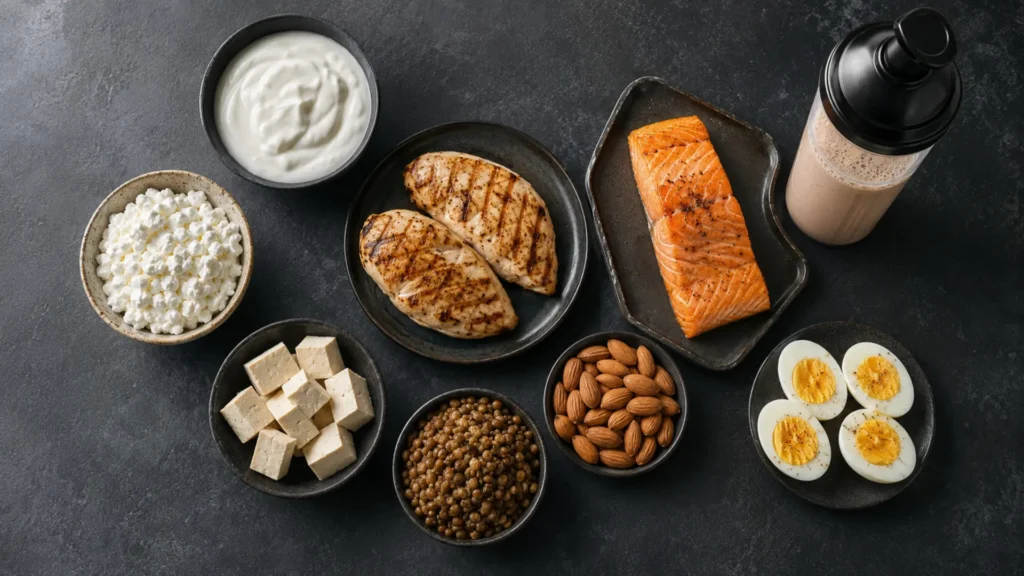
Animal foods are usually complete, meaning that they contain all of the essential amino acids. Protein requirements can also be met from plant foods by a diversified diet. Egg, dairy, fish, poultry, soy, beans, lentils, nuts and seeds are all sources of protein.

Fiber vs Protein: Key Differences
| Feature | Fiber | Protein |
| Main role | Digestive and metabolic support | Growth, repair, and tissue maintenance |
| Digestion | Not fully digested | Broken into amino acids |
| Calories | Varies by type and fermentation | About 4 calories per gram |
| Best sources | Plant foods | Animal and plant foods |
| Deficiency concern | Constipation and poorer diet quality | Loss of muscle and impaired repair |
| Fullness | Adds volume and slows digestion | Strong satiety signal and slower gastric emptying |
The take home message from Fiber vs. Protein is straightforward: They have different functions, and you can’t take one and leave the other out.
Fiber vs Protein for Weight Loss
Both can work together in a sustainable calorie deficit to help with fat loss. Fiber-rich foods tend to be bulky but low in calories, whereas protein is good for building lean mass and has a greater thermic effect than carbohydrate or fat. They can help to reduce hunger, and make the food portion feel fuller.
Lentil soup will generally fill you up more than plain crackers will; yogurt, berries and chia will usually defeat sugary cereal. Weight loss still relies on the total intake, sleep, activity, consistency and NOT on one nutrient.
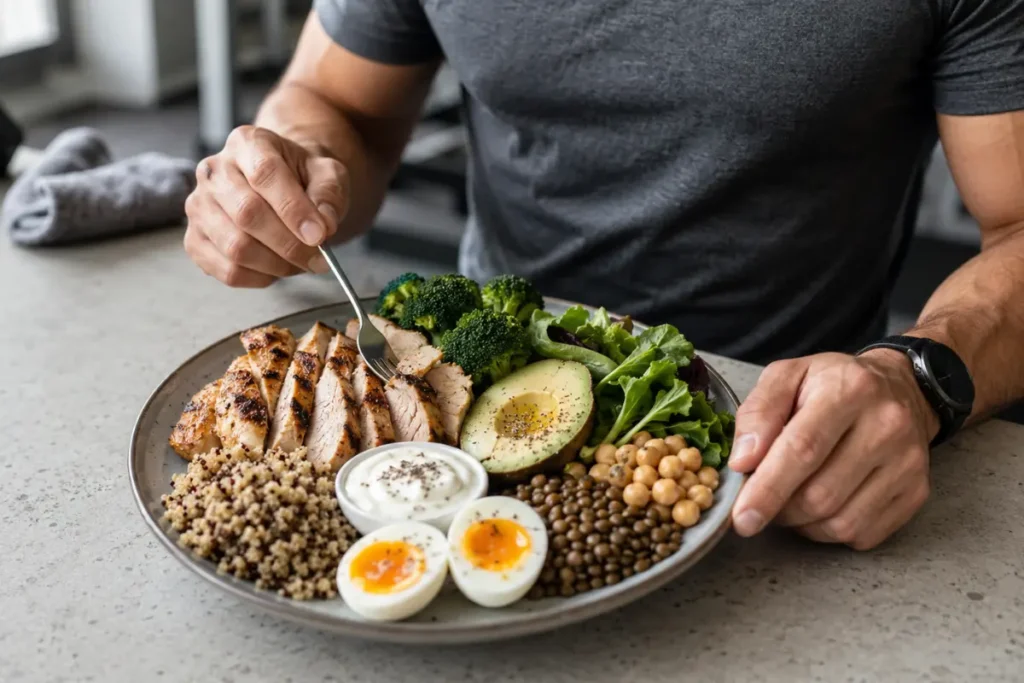
Fiber vs Protein for Muscle Growth
The direct benefit of protein is for muscle growth because resistance exercise and adequate protein levels promote muscle protein synthesis. Fiber itself is not a muscle builder but fiber rich carbohydrates can aid in training energy, recovery and diet quality.
One common question people ask is best time to take protein? Distribute throughout the day and have a portion within a few hours before or after workouts. It’s not a small window post exercise that matters, it’s a daily window.
Which Is Better for Gut Health?
For gut health, it is typically best to go with fiber. Several fibers aid stool consistency and fuel good bacteria. But too much can be a bad thing: a quick increase can lead to gas, bloating, cramps or diarrhea. Slowly increase the amount and make sure you are taking in a sufficient amount of fluid.
Protein continues to be useful for the digestive tissues. A gut-friendly pattern involves using different plants with little protein processing.
Which of the following is better for keeping you full for longer?
There is no single answer to the question of whether it is fiber or protein that is the most satisfying. The fullness hormones are strongly affected by protein, and fiber provides bulk, slows down digestion and may also lower the energy density of meals. Fat and the texture of food is also important.
The most filling combinations usually are eggs and whole grain toast AND chicken and beans and vegetables. Whole foods are generally more filling than fluid calories.
How much fiber do you require?
The average target for the U.S. is different by age and sex. Woman, it is recommended that they take 25g per day until the age of 50, and between the ages of 50 and 60, it is recommended that they take 21g per day, while men are recommended to take 38g per day until they reach the age of 50, and once they reach the age of 50, they are recommended to take 30g of protein per day. Another rule of thumb is 14 grams of protein per every 1,000 calories.
If you are not currently used to consuming significant amounts of fiber, start with 2-3 grams per serving, not all at once. Water softens stools and aids fiber in functioning.
How Much Protein Do You Need?
The Recommended Dietary Allowance for the adult is 0.8 grams per kg per day or approximately 0.36 grams per lb per day. It’s a standard, not an ideal, for healthy adults, not for every objective or goal.
Those with higher fitness, older ages, dieters or individuals recovering from illness may require more with guidance. The average daily consumption for active adults is about 1.2 – 1.6 grams per kg. When deciding on the best time to take protein, start with the amount of protein in a day.
Best Foods High in Both Protein and Fiber.
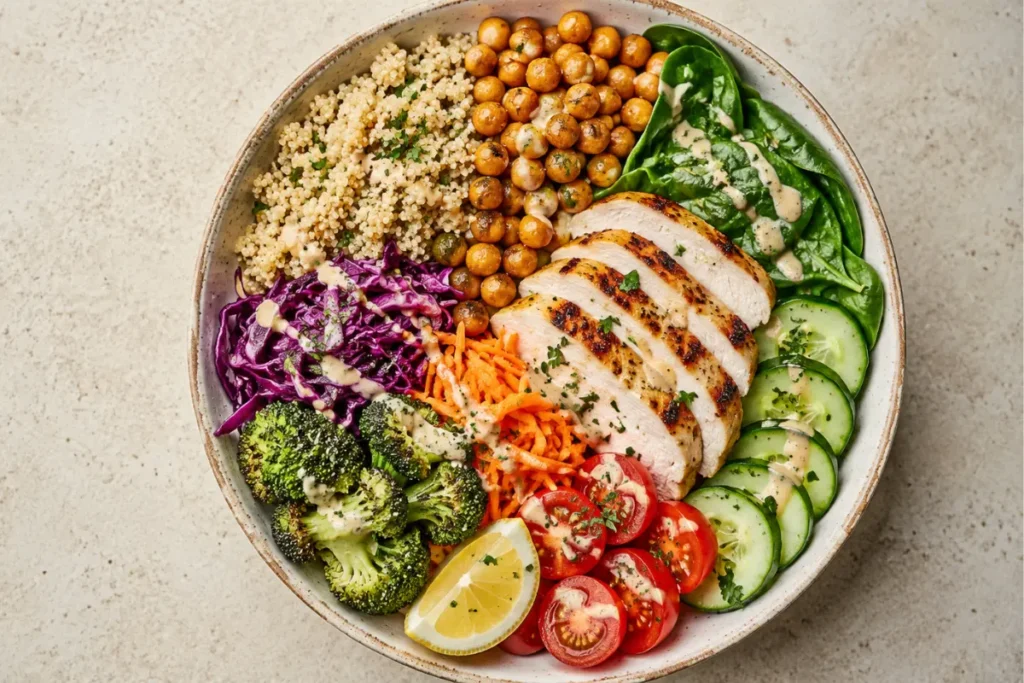
Legumes will supply both nutrients naturally. Also: Soy, whole grains, nuts and seeds are great. Consider adding chia to yogurt, eggs with black beans, or chicken with quinoa and veggies.
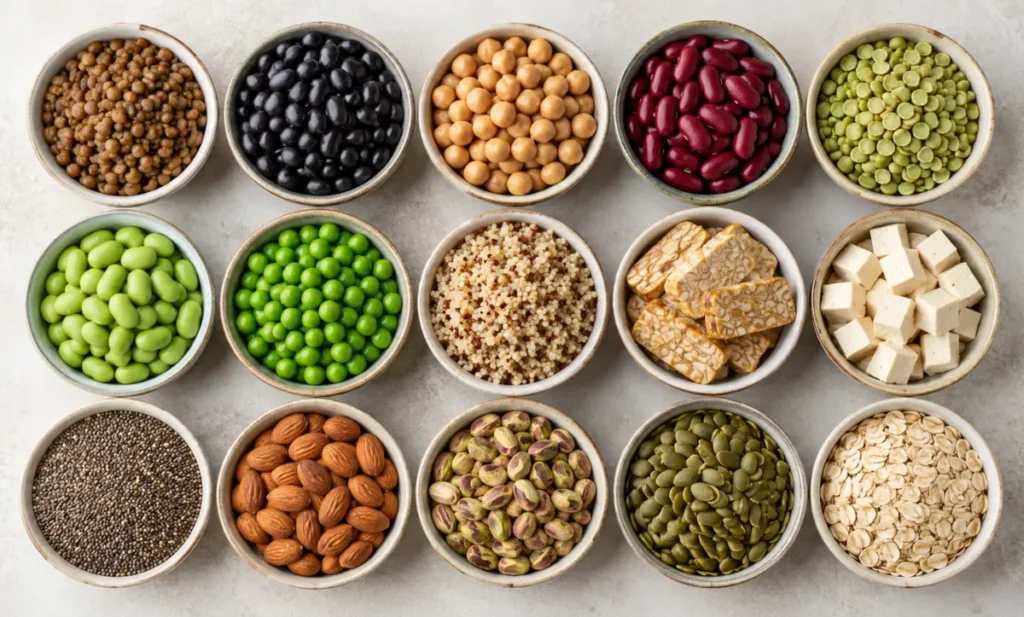
15 High-Protein, High-Fiber Foods Table
Values are approximate and are different among brands, varieties and preparations.
| Food | Typical serving | Protein | Fiber |
| Lentils, cooked | 1 cup | 18 g | 16 g |
| Split peas, cooked | 1 cup | 16 g | 16 g |
| Black beans, cooked | 1 cup | 15 g | 15 g |
| Chickpeas, cooked | 1 cup | 15 g | 13 g |
| Kidney beans, cooked | 1 cup | 15 g | 13 g |
| Edamame, cooked | 1 cup | 18 g | 8 g |
| Green peas, cooked | 1 cup | 8 g | 9 g |
| Quinoa, cooked | 1 cup | 8 g | 5 g |
| Tempeh | 100 g | 19 g | 4–7 g |
| Firm tofu | 1 cup | 20 g | 3 g |
| Almonds | 1 oz | 6 g | 4 g |
| Pistachios | 1 oz | 6 g | 3 g |
| Chia seeds | 2 tbsp | 5 g | 10 g |
| Pumpkin seeds | 1 oz | 8 g | 2 g |
| Oats, dry | 1/2 cup | 5 g | 4 g |
How to Make Fiber + Protein in Every Meal
Follow this easy two-part recipe: select one protein anchor and combine it with at least one fiber-rich plant.
Breakfast: Eggs, fruit and whole grain toast.
Lunch: tuna or tofu, beans, greens and whole grains.
Snack: yoghurt and berries and seeds, or hummus and vegetables.
Dinner: Fish, chicken, tempeh or lentils and vegetables, brown rice.
This will solve one of the biggest problems in Fiber vs. Protein without having to complicate tracking. Tune portions to what you require.
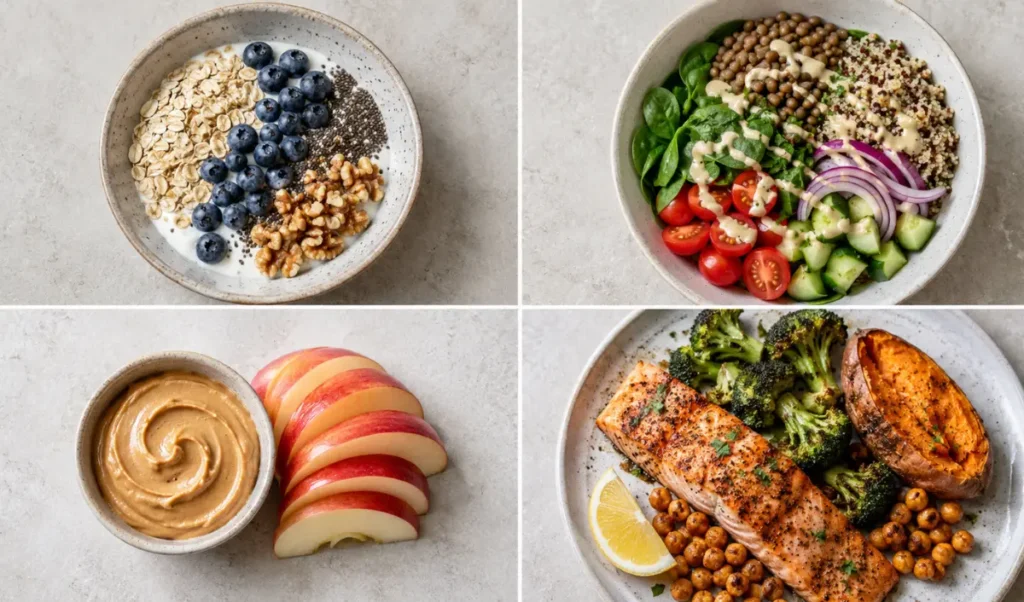
Sample 1-Day High Protein and High Fiber Meal Plan
Snack: Breakfast crackers with cheese, crackers, and fruit.
Lunch: Lentil-quinoa bowl with spinach, tomatoes, cucumber and tahini.
Snack: Peanut butter and apple.
Dinner: Grilled salmon or tempeh, roasted broccoli, sweet potato and chickpeas.
This pattern yields about 90-120g of protein and 30-40g of fiber, depending on servings. Customize it to suit your requirements.
Best Breakfast: Protein vs Fiber vs Both
Both is obvious. A protein-only breakfast might be lacking in plant diversity, but a fiber-only breakfast might not satisfy everyone. Enjoy overnight oats with milk, yoghurt, berries and chia, scramble eggs with black beans and vegetables, or tofu scramble with whole-grain toast.
The best time to take protein strategy can include breakfast, as it spreads the protein consumption throughout the day rather than just at night. It is okay to have a later first meal too.
Common Mistakes
- Taking in too much fiber at once and not drinking enough fluids.
- Relying on powders and/or avoiding whole foods.
- Assuming that a high protein diet means that one can overlook calories or saturated fat.
- Mainly consuming fibre that comes from bars containing isolated fibre which causes discomfort.
- Consuming almost all protein during one meal.
- Relies on plant protein rather than eating a wider variety of proteins in adequate amounts.
- Supplements as a way of filling in an imbalanced diet.
Who should avoid high fiber/protein?
Those with kidney disease, should speak with their health care provider about an appropriate protein level. A temporary low-fiber diet may be necessary for someone with gastroparesis, narrowing of the bowels, an active inflammatory bowel disease, a recent gastrointestinal surgery or for individuals with severe gastrointestinal symptoms. People who continue to have bloating, pain, vomiting, constipation, diarrhea, or unexplained weight loss should not attempt an extreme diet, but should receive medical advice.
Targeting should also be adjusted when pregnant, during training or recovery and at an older age. A dietitian can transform medical requirements into food.
Conclusion
The Fiber vs Protein question is misleading. Protein leads to muscle building and tissue repair, fibre leads to regularity, microbial diversity and metabolic health. They work together to achieve fullness and weight management.
The verdict for Fiber vs Protein: Make meals based on high quality protein and Fiber from plants. That habit is worth more than a declaration of a winner – and it’s the only plan that’s possible that isn’t extreme.
Looking for more expert fitness tips, nutrition advice, and workout guides? Visit our Home Page to explore the latest health and wellness content.
Frequently Asked Questions
-
Is it safe for me to have a high protein, high fiber diet at the same time?
Yes. The mixture is healthy and filling for the majority of healthy people. Eat fibre slowly and make sure to drink plenty of water.
-
Is protein a source of fibre?
There is no fibre in animal proteins. Both can be found in plant proteins like beans, lentils, nuts and seeds and in soy foods.
-
Fiber or protein – which one is better for belly fat?
They do not have a specific focus on belly fat. Fat loss is fueled by a sustainable calorie deficit, resistance and aerobic exercise, sleep, and a balanced eating pattern. Both nutrients can aid weight and meal quality.
-
When’s the best time to consume protein when exercising?
Eat protein within 2-4 hours before or after training. The important thing is to take them on a regular basis, not at a precise time.
-
Is it possible that fiber can prevent the absorption of protein?
The protein deficiency will not be significant if the person is on a well-balanced diet and eating normal amounts of food of protein origin. Some people may experience a decrease in energy or nutrients from extremely low calorie or very high fiber diets.