For years, women were often encouraged to focus mainly on cardio, while strength training was treated as something only athletes or serious gym-goers needed. That idea has changed for good reason. Strength training for women is one of the most useful forms of exercise for building strength, supporting healthy movement, and making everyday activities easier.
You do not need an expensive gym membership, complicated equipment, or hours of free time to get started. A pair of light dumbbells, a resistance band, or even your own body weight can provide enough resistance for an effective workout.
The exercises below are beginner-friendly and can be used to create a simple workout at home or in the gym. With the right approach, you can build a full-body routine in around 30 minutes.
What Is Strength Training?
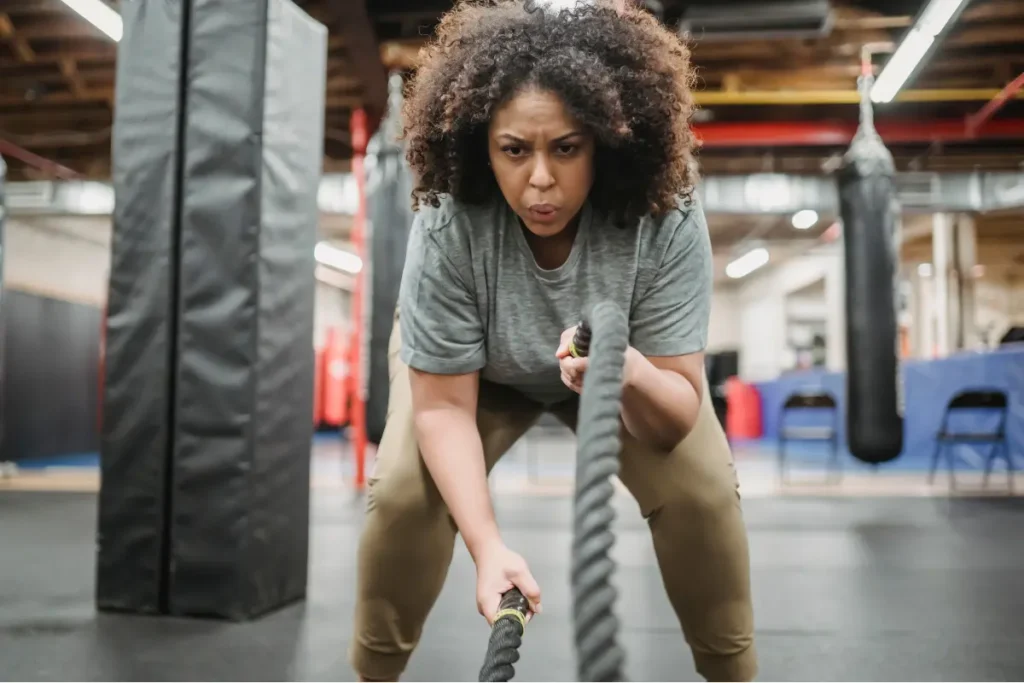
Strength training is any type of exercise that makes your muscles work against resistance. That resistance can come from:
Dumbbells
Weight Machines
Resistance Bands
Kettle Bells
Household Objects
Your muscles gradually adapt when you challenge them regularly. Over time, movements that once felt difficult can become easier and more controlled.
As a beginner, you do not need to lift heavy weights or train until you are completely exhausted. Good technique, an appropriate level of resistance, and gradual progress matter much more than trying to do too much during your first few workouts.
Why Strength Training For Women is so Important.
Strength training offers benefits that go beyond building muscle. It can support your bones, improve everyday movement, help you maintain lean muscle, and give you a greater sense of confidence in what your body can do.
1. Builds and Maintains Lean Muscle
Muscle helps with everyday activities such as:
Walking
Climbing Stairs
Carrying Groceries
Lifting Objects
Good Posture
As you become stronger, normal activities may start to feel easier and less tiring. Strength can also support other activities such as walking, running, cycling, and sports.
You do not need long workouts to make progress. A simple 30-minute workout plan can be a realistic way to train your whole body without spending hours exercising.
2. Supports Bone Health
Bone health becomes especially important as women get older. Weight-bearing and resistance exercises can help support strong bones as part of an overall healthy lifestyle.
Strength training can also help you develop better movement habits early in life, which may support physical independence as you age.
If you have osteoporosis, joint problems, a previous fracture, or another health concern, it is a good idea to speak with a healthcare professional before starting a new strength-training routine.
3. Improves Body Composition and Metabolic Health
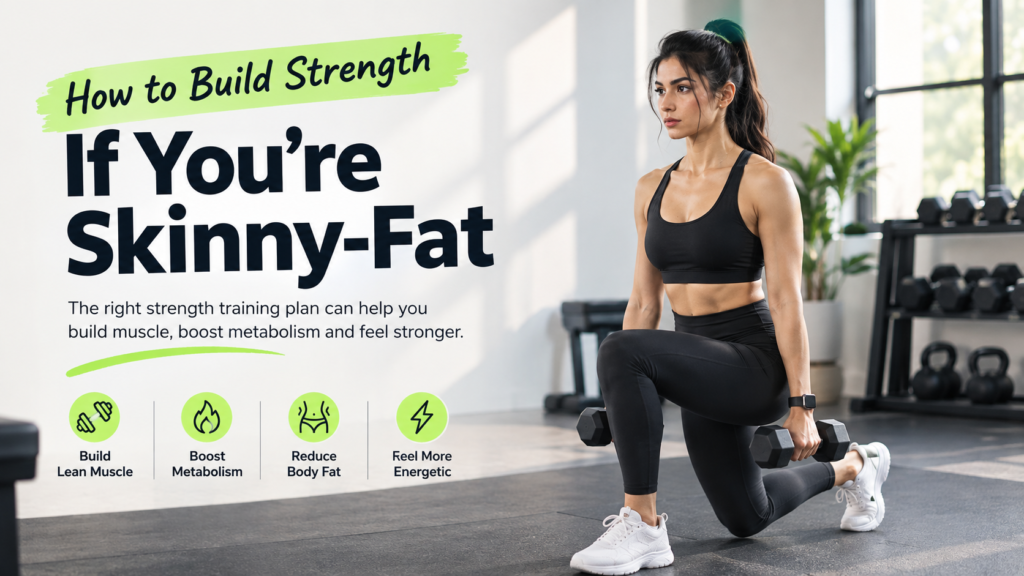
Strength training can help you build or maintain lean muscle while supporting a healthy body composition.
However, lifting weights should not be treated as a magic solution for weight loss. Nutrition, sleep, daily activity, stress, and regular exercise all play a role in long-term results.
If your goal is to lose belly fat, strength training can be one part of a balanced approach alongside healthy eating and regular movement.
The best workout is often one you can repeat consistently. A 30-minute routine that you can stick with is more useful than an extremely difficult workout that leaves you too exhausted to train again.
4. Supports Everyday Movement
Stronger muscles can help support your joints and control your movements.
Exercises that target the legs, hips, back, chest, shoulders, and core can help improve balance, stability, and posture. These abilities are useful when carrying a child, moving furniture, sitting at a desk, climbing stairs, or getting up from the floor.
Strength is not only about how much weight you can lift. It is also about making everyday movement feel easier and more controlled.
5. Can Boost Confidence
One of the best things about strength training is that progress is easy to notice.
You might complete an extra repetition, use a slightly heavier dumbbell, hold a plank for a few more seconds, or simply notice that an everyday task feels easier.
These small improvements can build confidence and make exercise feel rewarding rather than something you have to force yourself to do.
The 6 Beginner Strength Training Exercises to Start.
You do not need a complicated routine when you are just starting. These six exercises cover major muscle groups and can be performed at home or in a gym.
Before starting, spend around 3–5 minutes warming up with easy movement. Begin with two sets of each exercise and choose a resistance that allows you to maintain good form.
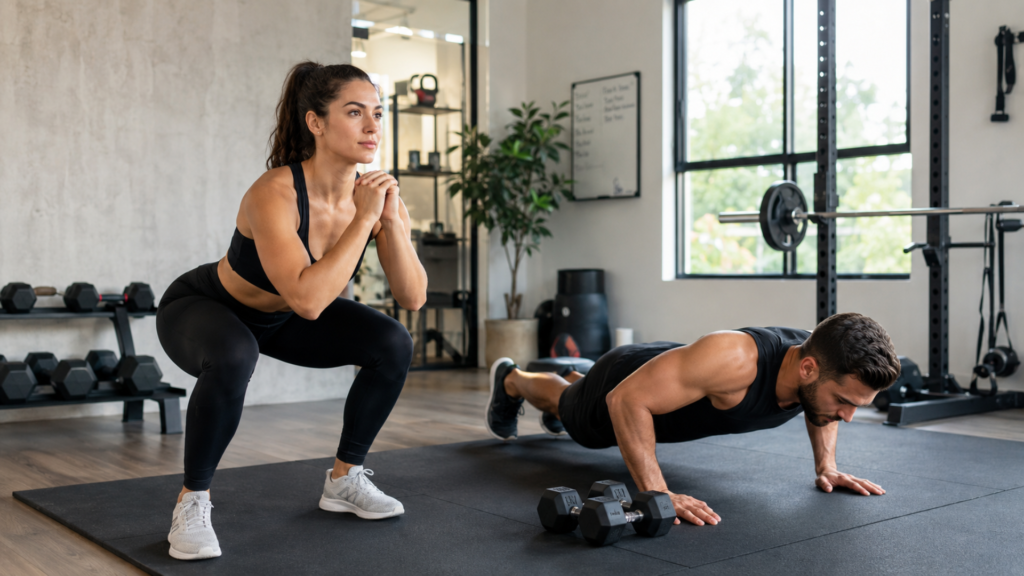
- Body-Weight Squat
How to do it:
Stand with your feet about hip- to shoulder-width apart, with your toes slightly turned outward. Brace your core and push your hips back as if you were sitting into a chair.
Bend your knees while keeping your chest lifted. Your knees should generally move in the same direction as your toes.
Push through your feet to return to standing.
Beginner target: 8–12 repetitions.
If regular squats feel difficult, squat toward a chair and lightly touch it before standing back up. Do not force yourself into a deeper position if your heels lift or you feel pain.
- Glute Bridge
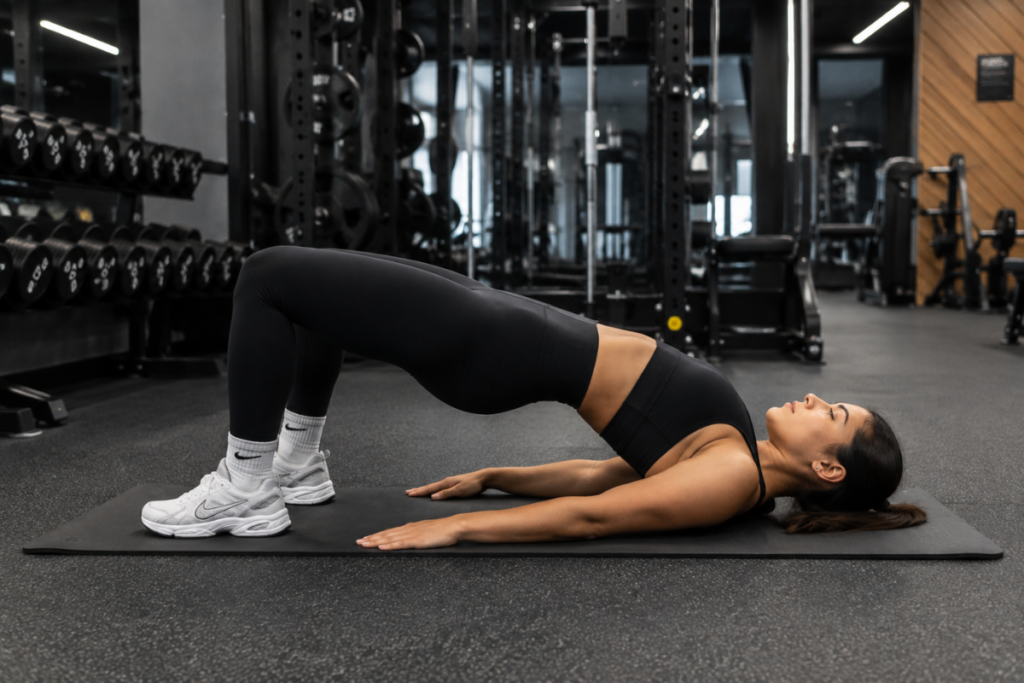
Lie on your back with your knees bent and your feet flat on the floor. Keep your arms beside your body.
Gently brace your core and push through your feet while squeezing your glutes to lift your hips. Pause briefly at the top, then lower your hips slowly.
Beginner target: 10–15 repetitions.
Try not to overarch your lower back at the top of the movement. Focus on using your glutes to lift your hips.
- Reverse Lunge
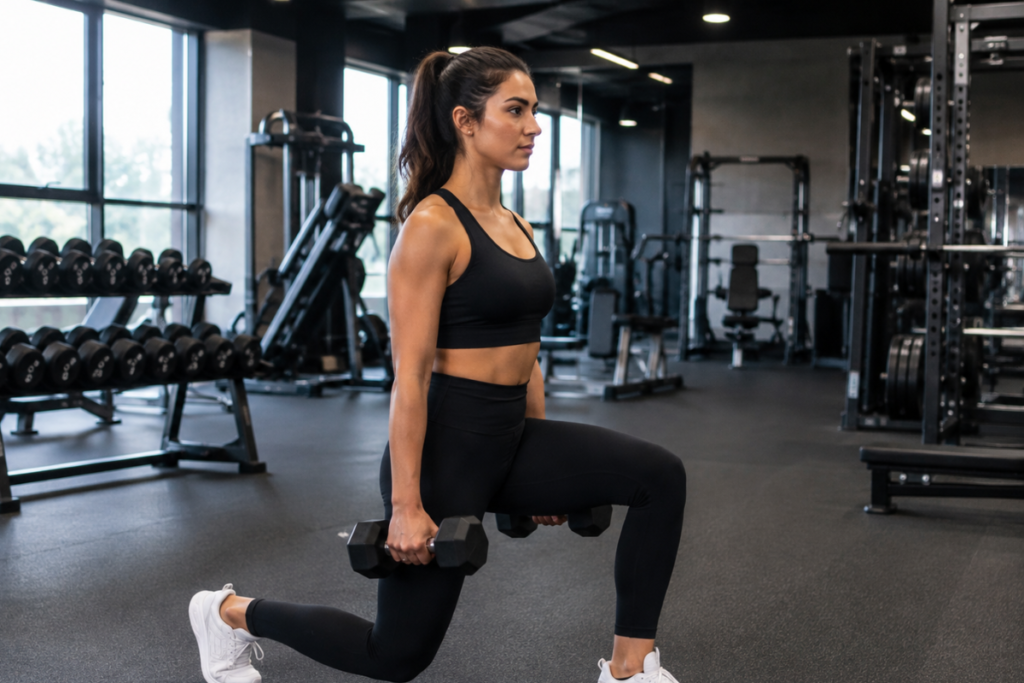
Stand tall with your feet about hip-width apart. Step one foot backward and bend both knees while lowering your body.
Keep most of your weight through the front leg and push through the front foot to return to the starting position.
You can alternate legs or complete all repetitions on one side before switching.
Beginner target: 6–10 repetitions per leg.
If you need extra balance, hold onto a wall or a sturdy chair.
- Incline Push-Up
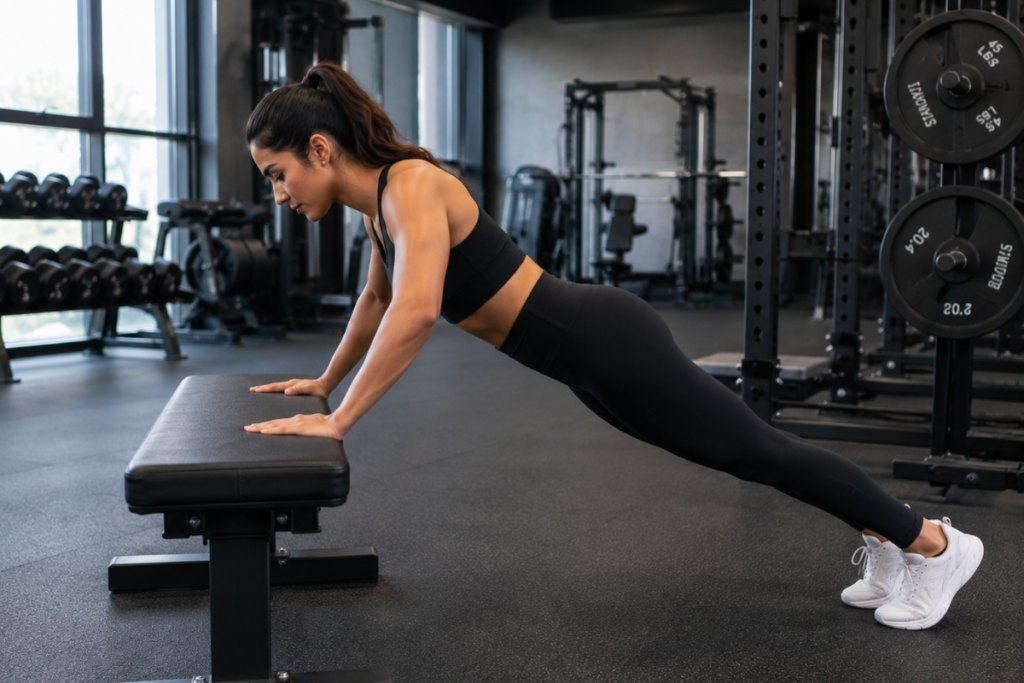
Place your hands slightly wider than shoulder-width apart on a stable wall, counter, or bench.
Step your feet back so your body forms a straight line. Bend your elbows and lower your chest toward the surface while keeping your body controlled.
Push through your hands to return to the starting position.
Beginner target: 6–12 repetitions.
A higher surface makes the exercise easier. As you become stronger, you can gradually use a lower surface.
- Dumbbell Bent-Over Row
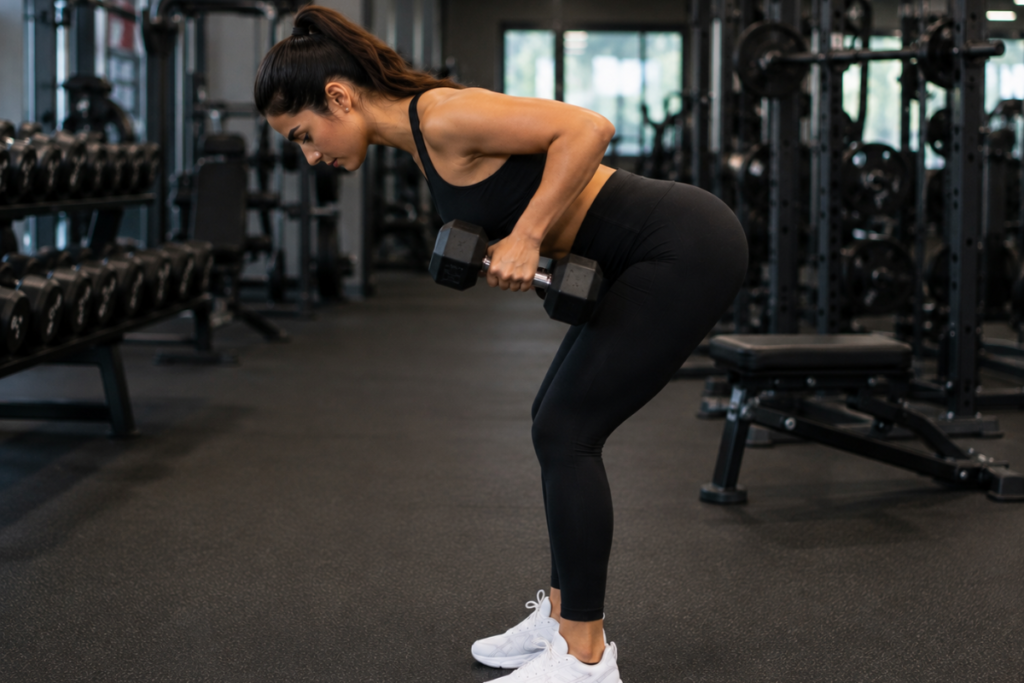
Hold a dumbbell in each hand. Keep your spine neutral, slightly bend your knees, and push your hips backward.
Let your arms hang below your shoulders. Pull the dumbbells toward your ribs while gently squeezing your shoulder blades together.
Lower the weights slowly and repeat.
Beginner target: 8–12 repetitions.
Avoid using momentum or shrugging your shoulders. If using two dumbbells feels difficult, perform the exercise one arm at a time while supporting yourself with a sturdy chair.
- Forearm Plank
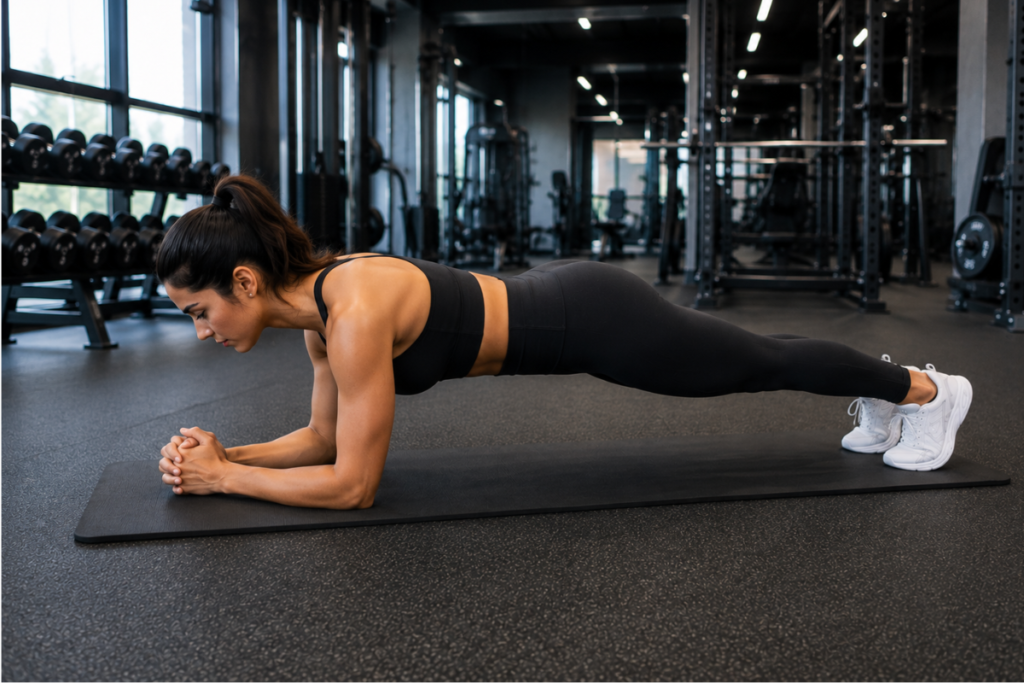
Place your forearms on the floor with your elbows underneath your shoulders. Extend your legs behind you and support yourself on your toes.
Keep your body in a straight line from your head to your heels. Brace your core and breathe normally.
Beginner target: 15–30 seconds.
If a full plank is too difficult, keep your knees on the floor or place your forearms on a bench.
If bodyweight exercises start feeling too easy, gradually increasing the challenge can help you make bodyweight workouts harder without immediately needing heavy equipment.
A basic beginner’s exercise plan.
You can perform these six exercises as a full-body circuit.
Start with a short warm-up, complete each exercise for the recommended repetitions, and take a short rest when needed. After finishing all six exercises, rest for 1–2 minutes and repeat the circuit.
A simple 30-minute session could look like this:
- 5 minutes: Warm-up
- 20 minutes: Strength exercises
- 5 minutes: Cool-down and gentle stretching
The workout does not have to last exactly 30 minutes. The goal is to complete the exercises with good technique rather than rushing just to finish within a certain time.
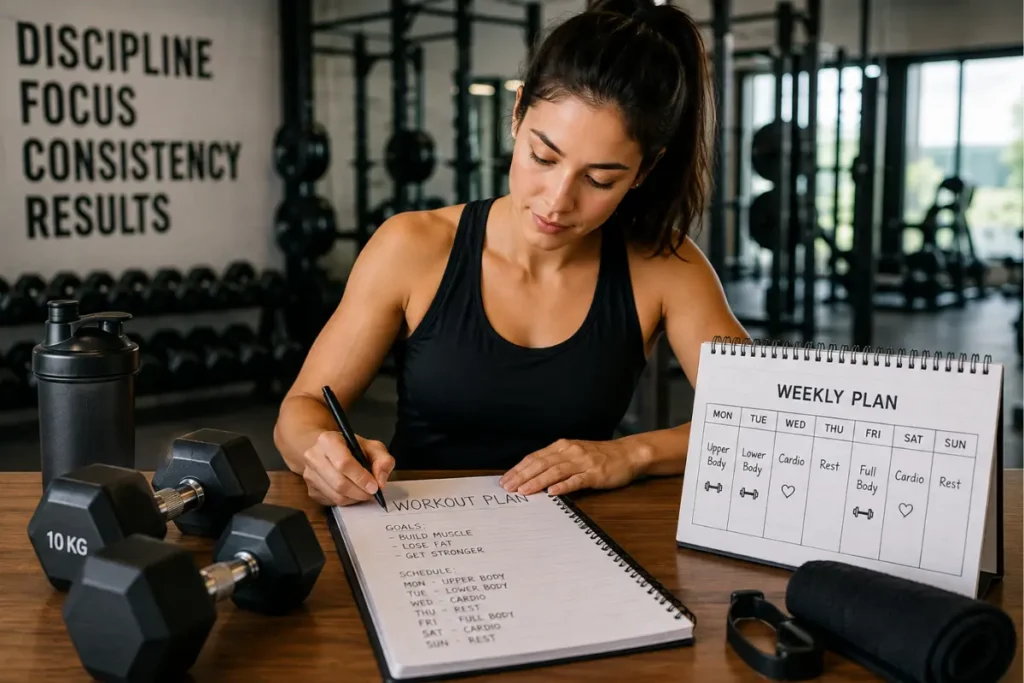
For beginners, two strength-training sessions per week on alternate days can be a good starting point. As the exercises become easier, you can gradually add repetitions, another set, slightly more resistance, or a more challenging variation.
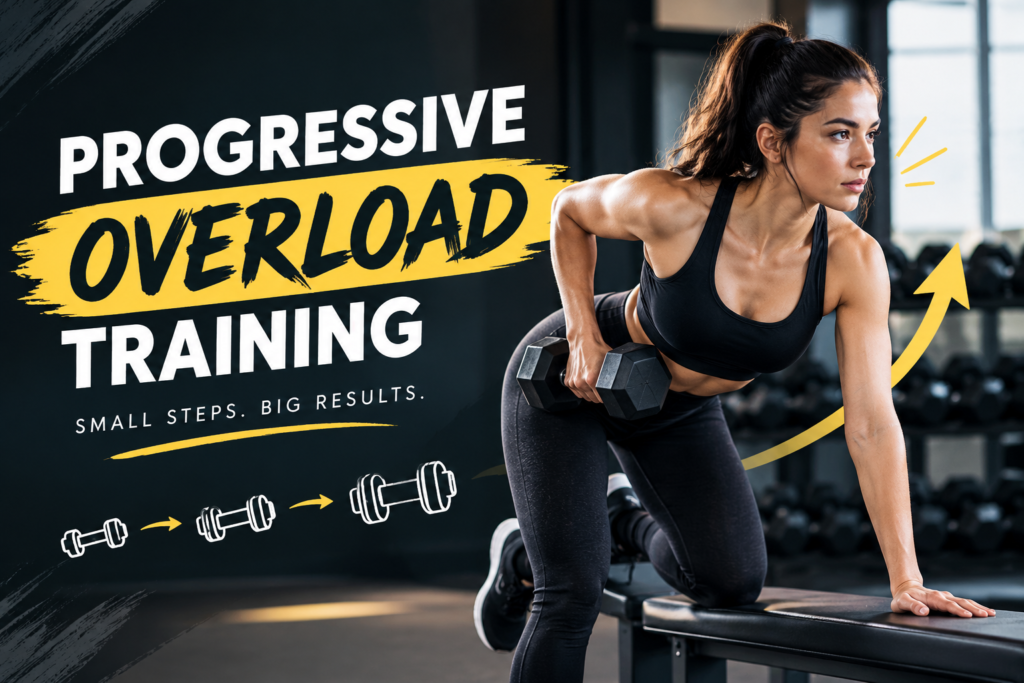
This gradual increase is known as progressive overload. It gives your muscles a reason to adapt while allowing you to maintain proper form.
How to Avoid Common Mistakes for Beginners
Starting with the basics can save you from many common mistakes.
Do not lift more weight than you can control. Heavy weights are not automatically better. Choose a resistance that allows you to complete your repetitions with good form.
Do not rush your repetitions. Controlled movements help you stay in the correct position and make the exercise more effective.
Remember to breathe. Avoid holding your breath throughout the entire exercise. Breathe steadily and stay focused on the movement.
Do not change your routine every few days. Repeating the same basic movements gives you time to improve your technique and track your progress.
Do not ignore pain. Muscle fatigue and effort are normal, but sharp or unusual pain is a reason to stop and reassess the movement.
Recovery matters too. Your body needs enough food, water, sleep, and rest to adapt to training. If you are pregnant, recovering from an injury, or managing a health condition, get individual advice from an appropriate healthcare professional before starting a new exercise routine.
How to Stay Consistent With Strength Training?
The best workout routine is one that fits your actual life.
Choose two or three days that work well for you and keep track of your exercises, repetitions, and resistance. On busy days, even a shorter workout can be more useful than skipping exercise completely.
Your routine should also change gradually as you become stronger. After a few weeks, you may be ready for heavier dumbbells, stronger resistance bands, more repetitions, or more challenging exercise variations.
You do not have to improve every single session. What matters most is making steady progress over time.
If you are also working on your nutrition, getting enough protein throughout the day can support muscle recovery. The amount you need depends on your overall diet and activity level, so focus on getting regular protein-rich foods rather than relying on one specific meal or supplement. Factors such as the best time to take protein are less important than consistently meeting your overall nutrition needs.
A sustainable routine will always beat a perfect routine that you cannot maintain.
Final Thoughts
Strength training can be a practical and effective way for women to build muscle, support bone health, improve movement, and feel stronger in everyday life.
You do not need an expensive gym membership or an advanced workout routine to begin. Squats, glute bridges, lunges, incline push-ups, rows, and planks provide a simple foundation for full-body training.
Start with manageable resistance, focus on your technique, and give yourself time to improve. If you want to rebuild muscle, gradually increasing resistance and staying consistent with your workouts can make a big difference over time.
Your progress does not have to be dramatic to be meaningful. One extra repetition, better form, or slightly more resistance is still progress.
And if you are creating your own weekly schedule, factors such as your fitness level, available time, recovery, and goals can help you build your own workout routine that you can actually maintain.
Looking for more expert fitness tips, nutrition advice, and workout guides? Visit our Home Page to explore the latest health and wellness content.