Go to any gym and you will hear various regulations regarding protein. One man tells you that you have to have a shake before your last set. The other one says that protein is only effective when you consume it with an empty stomach. So Go to any gym and you will hear various regulations regarding protein. One man tells you that you have to have a shake before your last set. The other one says that protein is only effective when you consume it with an empty stomach. Some other one suggests casein before going to bed. Having so much contradictory information, the question is: When is the best time to take protein to build muscle?
The plain and easy answer is that the total amount of daily protein counts more than a single ideal minute. The majority of gym-goers will be doing well by splitting adequate protein into multiple meals and consuming one of the meals within a few hours prior to or following training.
Why Protein is Important to Your Muscles.
Resistance training informs your body to change. Protein is a source of amino acids that aid in repairing tissue and creating new muscle proteins. Shake is not the automatic stimulus to build muscular mass: training, food, and rest, respectively, are the building materials, the building materials, and the adapters. These components should collaborate to rebuild muscle effectively.
This larger-scale approach is backed by research. In a big systematic review, the researchers concluded that protein supplementation is effective in enhancing muscle gains when doing longer-term resistance training. The advantage however, diminishes when the total intake is about 1.6 grams per kilogram of body weight per day in most adults.
When is the Best Time to Take Protein to Build Muscle?
When you train, the last meal that you took, and whether you are achieving your daily target are the most important factors that determine the best time to take protein to build your muscles. Resistance exercise makes your muscles more responsive to protein many hours after your workout, giving you a broader window to capitalize on than the well-known 30-minute anabolic window.
According to a 2025 systematic review, protein before training, but not after training, did not significantly influence lean mass. Previous investigation had determined that apparent timing benefit was due in large part to total protein intake. Consistency beats panic.
It does not matter when. It makes sense to eat shortly after the training in case your last protein-rich meal was four or five hours ago. When you had a big meal one or two hours before a workout, then there is not as much urgency.
Should You Take Protein Pre-Workout?
Pre-workout protein comes in handy when you train a few hours after the last meal. Consumption of protein of one to three hours prior to exercise puts the amino acids in circulation during and post exercise.
An effective pre-workout meal could be 20-40 grams of protein and carbohydrates. Good choices include:
- Oats and fruit Greek yogurt.
- Whole-grain toast and eggs.
- Chicken or tofu and rice.
- A banana whey/soy shake.
- Fruit and cottage cheese.
Do not eat a huge meal just before a strenuous exercise. When you have 30-60 minutes, then have something light e.g. shake, or yogurt.

Is Post-Workout Protein Better?
Post workout protein is a convenient and efficient but not magic. Consumption of 20-40 grams of good-quality protein post-workout can trigger muscle protein synthesis and assist you in achieving your daily goal. It is particularly important when you have exercised in a fasted state or when you have not eaten protein a few hours before.
To most individuals, the most best time to eat protein to build muscle is merely the first convenient meal after the workout. The meal may be consumed either at once or in the next two hours. You are not wasting your exercise since it would take you over 30 minutes to get to your house.
Select a complete protein with all the essential amino acids. Examples include whey, milk, eggs, meat, fish, and soy. Throughout the day, plant-based eaters can utilize beans, lentils, tofu, tempeh, grains, nuts, and seed.
Does the 30-Minute Anabolic Window Exist?
The anabolic window is a wide window, not a door that is quickly closing. How urgently post-workout protein is required depends on the size and timing of the meal you eat before the exercise.
Trained: Have protein immediately after exercise.
Last meal: 4 or more hours ago: Have protein immediately after training.
Eat one to two hours prior to training: Your post exercise meal is on hold.
Already consume protein regularly: Precise timing is not so crucial.
This is the reason why the optimal time to consume protein in order to build muscle involves the entire day rather than just the time after you complete a workout.
The Question of the Amount of Protein to eat every Day.
In weight lifters, a good general guideline would be about 1.4-2.0 grams per kilogram of body weight per day. A large number of individuals are able to optimize muscle-building gains at close to 1.6 grams/kg.
For example:
An individual of 1.6 g/kg with a weight of 60 kg requires approximately 96 grams per day.
An individual with a BMI of 1.6 g/kg and a weight of 75 kg requires approximately 120 grams of food per day.
An individual with a BMI of 1.6 g/kg and a weight of 90kg requires approximately 144 grams per day.
These values are only starting points and not medical orders. Individuals who have kidney disease or other health issues ought to consult a qualified health professional about significant alterations in their diet.
Distribute Protein throughout the Day.
Rather than stocking almost all of your protein in one meal, divide it into three or five meals. It is usually advised to take 20-40g, or about 0.25-0.40g/kg per meal, three to four times an hour.
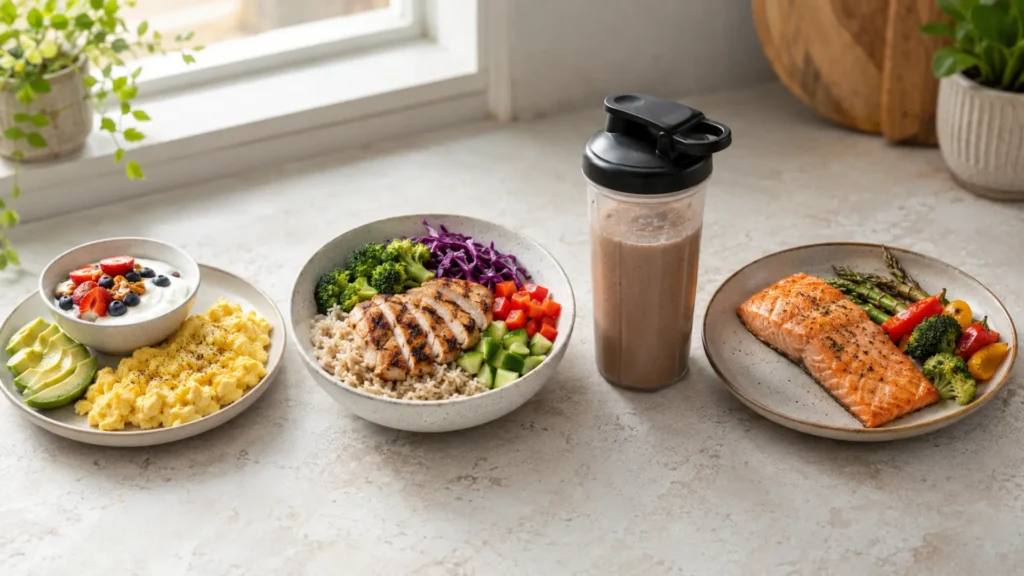
This method continues to give amino acids to fuel muscle protein synthesis and makes a high daily goal simpler to achieve. An easy day might consist of eggs and yogurt in the morning, chicken or tofu at lunch, milk before training and beans, fish and cottage cheese at dinner.
Should you eat protein before going to bed?
Protein before sleep may be used in case of early dinner or low daily intake. It is claimed that 30-40 grams of casein may enhance the protein synthesis in the body overnight. It is optional in case dinner has adequate protein.
Rest Days Protein Timing.
Resting between sessions and recovery is ongoing and therefore protein is important during the rest days. Whenever it allows you to distribute protein evenly and achieve your target, the optimal moment to consume protein in growing muscles is during a rest day. When there was no workout, there is no need of a post-workout shake.
Will Protein Help You lose Belly Fat?
Protein assists fullness and lean-mass retention in dieting, however, it is not able to address a particular body part. The search terms like loss belly fat usually result into misleading information. Where to lose fat is determined by your body.
To lose fat in general, a combination of a manageable calorie deficit and resistance training, sufficient protein, sleep, and activity is necessary. When progressive exercise is involved, a 30 minutes workout plan will assist, however, no quick workout nor protein supplements will ensure you lose abdominal fat.
When you typed in loss belly fat, you should consider the sustainable habits, but not the nutrient. Protein can also keep you full and maintain muscle mass, and the calorie deficit will stimulate weight loss.
Sample Protein Schedule at Various Workout Times.
Morning exercise: Light protein-and-carbohydrate snack pre-training (only when tolerated) followed by a protein-rich breakfast. And eat, train fast, eat.
Afternoon exercise: Have protein in breakfast and lunch and a protein-based snack or dinner after the exercise. This provides your body with repeated chances to regenerate muscle.
Evening exercise: Consume protein with normal meals, consume light pre-workout snack (when necessary), and eat dinner following exercise.
Novices with a tight schedule can match this schedule with a 30 minutes exercise regimen with squats, presses, rows, hip hinges, and core exercises.

Common Protein-Timing Mistakes
Failure to the rest of the plan may bring results to a halt. The following are some of the pitfalls to avoid:
- Being fixated on timing and consuming inadequate total protein.
- Exercising with no progressive resistance and shaking.
- The more the protein the more the muscle.
- Disregarding other healthy foods.
- Eating supplements rather than balanced meals.
- Reducing calories to the extent of causing a decline in training performance.
- Holding protein responsible to eliminate fat in a particular part of the body.
- Lack of sleep, lack of hydration, and rest days.
Protein powder is not necessary and convenient. Wholesome foods are an added source of nutrients whereas when time or appetite is constrained, powders can come in handy.
Conclusion
Protein should be consumed at the most optimal time to aid in muscle building and it should be the time that allows you to maintain your daily requirement as well as assist in your training program. Consume protein in three to five meals, with one of the meals one to three hours post-workout, and eat earlier in case you were training when hungry.
The best time to take protein to build muscle will never substitute progressive training, adequate calories, and quality sleep. Timing: Timing is an assisting finishing detail and not the basis of your plan.
Frequently Asked Questions
Is it better to consume a protein shake before or after exercising?
Either can work. Protein prior to exercise can be useful in case you have not eaten in some time. In case you have trained fasted, take it afterwards.
When should I consume protein after exercising?
There is no need to hurry against a 30-minute deadline. It is feasible to have a meal or a shake within a few hours. Eat earlier when your last meal was some hours prior to training.
Is whey protein required for muscle growth?
No. Whey is easy, but eggs, dairy, meat, fish, soy, and diverse plant foods can fit your requirements, too.